
Frangipani Home
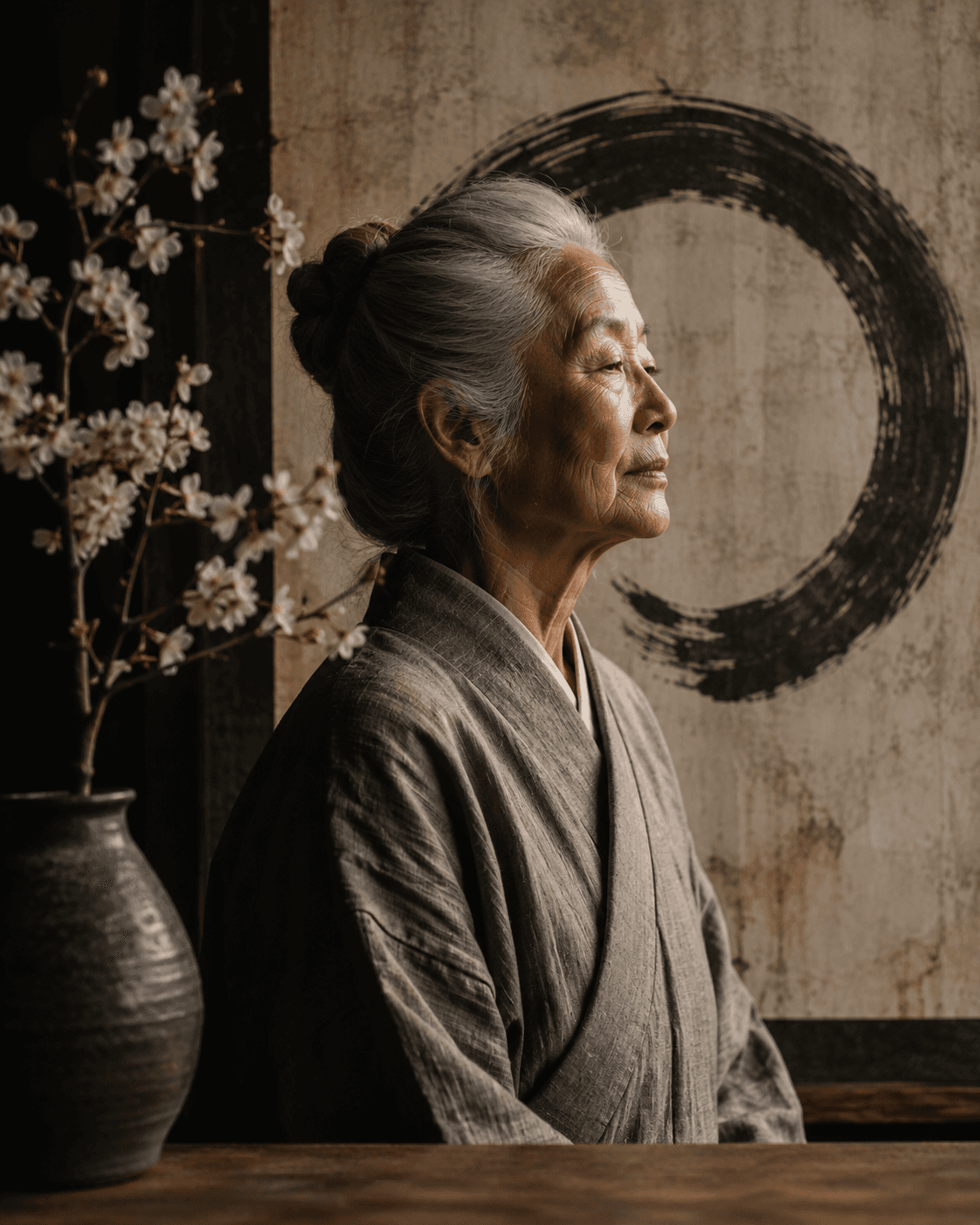
Donna anziana di profilo, in un ambiente raccolto, avvolta da una luce calda accanto a un ramo di ciliegio in fiore

Alessia Guttadauro · August 26, 2026

Journal — Persona

Longevity begins long before we grow old.

It isn't only about how long we live, but how we choose to inhabit the years we have.

We're used to talking about longevity when we think about age, as if it were a matter concerning the future — something to start thinking about later on.

And yet, perhaps, longevity begins much earlier. It begins in the days we repeat: in the way we sleep, eat, recover, in the time we give to relationships, in the places we choose to live.

It begins, in other words, in the way we inhabit the present.

It isn't a race against time.

We live in a culture that tends to treat time as something to be conquered: do more, produce more, stay efficient for longer. Even when we talk about wellbeing, we risk falling into the same logic — adding something to the routine, looking for the best method, optimising every part of the day.

But longevity can't just be an exercise in optimisation, because adding years to life isn't enough.

The question, perhaps, is a different one: what kind of life are we building inside those years?

The future is built in invisible habits

There are gestures that seem too small to matter: going to sleep when we're tired, eating without rushing, walking, spending time outdoors, having relationships that don't constantly ask us to be someone else, inhabiting spaces that let us slow down.

None of these gestures, taken alone, changes a life. But a life is made exactly of this: of what we repeat for long enough that it becomes our way of living.

Longevity, then, doesn't belong only to the future. It's also a matter of everyday life.

Ageing isn't something that starts at a certain age

Perhaps we should stop thinking of ageing as a precise moment that arrives sooner or later. Time is already passing, and every day shows us something about the way we're learning — or not learning — to move through it.

We can't stop it. But we can ask ourselves how we want to arrive on the other side: with what energy, with what relationships, with what relationship to our own body, with what home around us, with what capacity to recover, adapt, change.

Not to stay young. But to keep being present in our own life.

A more human kind of longevity

Perhaps talking about longevity also means changing perspective: not asking only "how can I live longer?", but "how can I build a life worth inhabiting for a long time?"

It's a different question, and perhaps a deeper one too, because it brings us back to the present, to the small choices, the rhythms, the spaces and the relationships we've talked about so far.

Longevity doesn't begin when we grow old.

It begins every time we choose to take care of the way we're living.

A thought to carry with you

Longevity isn't just about adding years to life. It's about giving more life to the years we inhabit.

If this article gave you something to reflect on, I'd be glad to hear your story.

Get in touch

Alessia Guttadauro · Frangipani Home

Back to Journal