
Frangipani Home
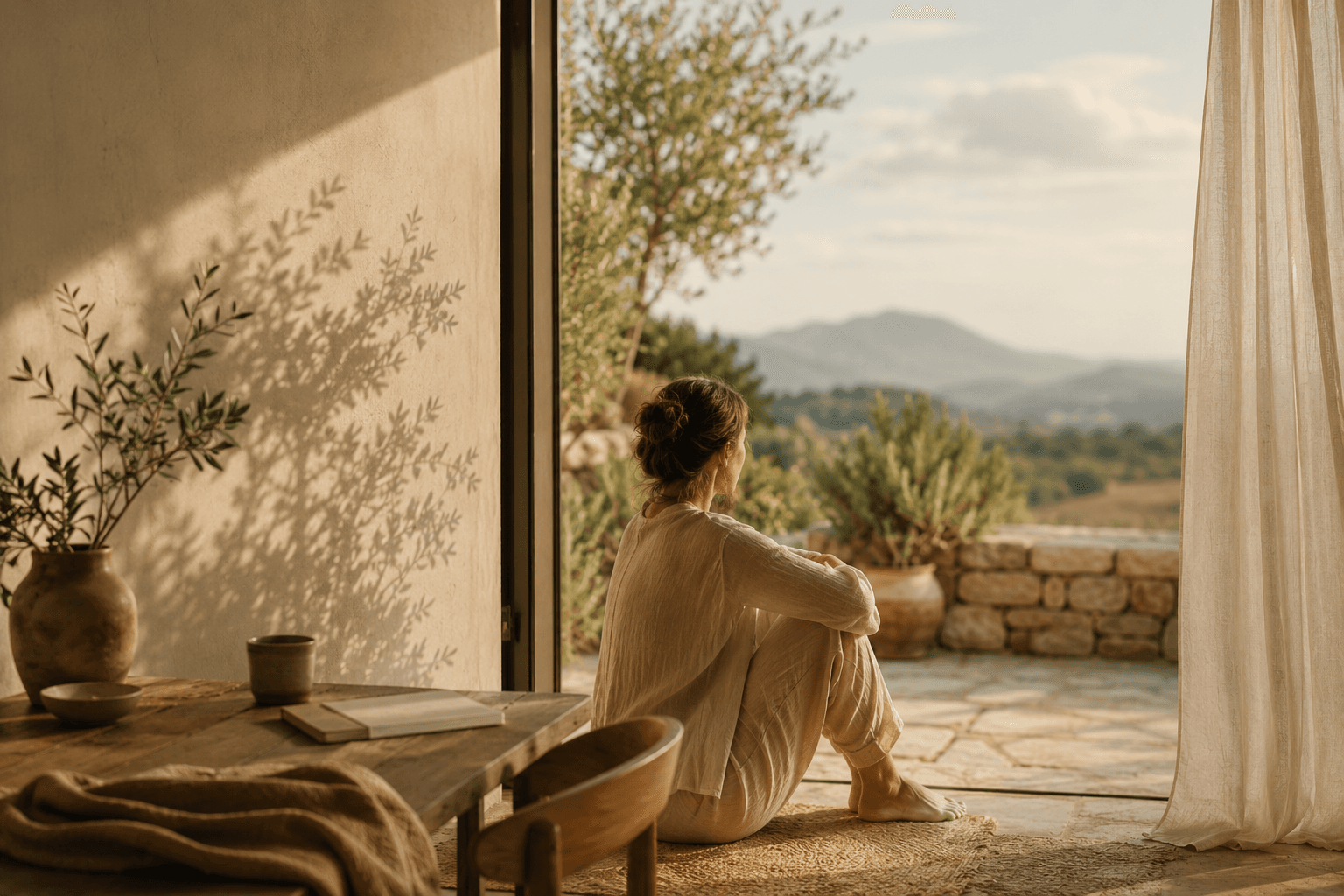
Donna seduta su una terrazza mediterranea, avvolta dalla luce del mattino, mentre osserva in silenzio le colline della Sardegna

Alessia Guttadauro · August 26, 2026

Journal — Persona

We forgot that the body has a rhythm too.

Perhaps wellbeing begins when we stop asking it to go faster and faster.

We live inside an almost uninterrupted succession of requests.

One thing after another.

A reply. A deadline. An appointment. A notification.

Even when there's nothing left to do, we often keep filling the time anyway.

We've learned to treat it as something to optimise, organise, recover.

But the body doesn't work that way.

The body knows rhythms.

Sleep and waking.

Hunger and fullness.

Activity and pause.

Tension and release.

Focus and rest.

Simple, almost invisible alternations that keep existing even when we choose to ignore them.

When we lose the rhythm

We don't always notice right away that we've pushed too far.

At first we simply keep going.

Then something shifts.

We wake up already tired. Slowing down becomes harder. We need stimulation to feel present. We reach the evening exhausted, but not necessarily able to rest.

And we often read all of this as a lack of energy.

Sometimes, perhaps, it's also a loss of rhythm.

Because we aren't built to sustain the same intensity all day, every day, in every season of life.

Recovery isn't a pause from life

We've learned to treat recovery almost as an interruption to productivity.

First we do everything there is to do. Then, if time remains, we rest.

But recovery isn't what happens afterwards.

It's part of the rhythm.

After focus comes pause. After activity comes rest. After exposure comes withdrawal.

Nature, too, doesn't move in a straight line.

Day gives way to night. Summer to autumn. Growth to stillness.

There's no wasted time in this alternation.

There's balance.

What if we listened sooner?

Perhaps finding your rhythm again doesn't require changing your life.

It can start with something much smaller: noticing.

How do I feel when I wake up? When does the need for a pause actually arrive? Am I resting, or simply moving from one activity to the next? How much of my day do I spend without stimulation?

And above all: how often do I listen to a signal before it becomes a need?

These aren't questions we need to answer right away.

They're a way of returning to listening.

Because the body, before asking to be changed, often asks to be heard.

Perhaps wellbeing isn't about finding a way to do everything. Perhaps it's about creating the conditions for activity and recovery to coexist again — in our days, our homes, our relationships, our bodies.

Perhaps slowing down doesn't mean covering less ground. It means walking your own path again, at the pace that belongs to you.

A thought to carry with you

Not everything that can be sped up needs to be. The body has its own time too: learning to listen to it is already a form of care.

If this article gave you something to reflect on, I'd be glad to hear your story.

Get in touch

Alessia Guttadauro · Frangipani Home

Back to Journal